
Project Synergy in South Africa
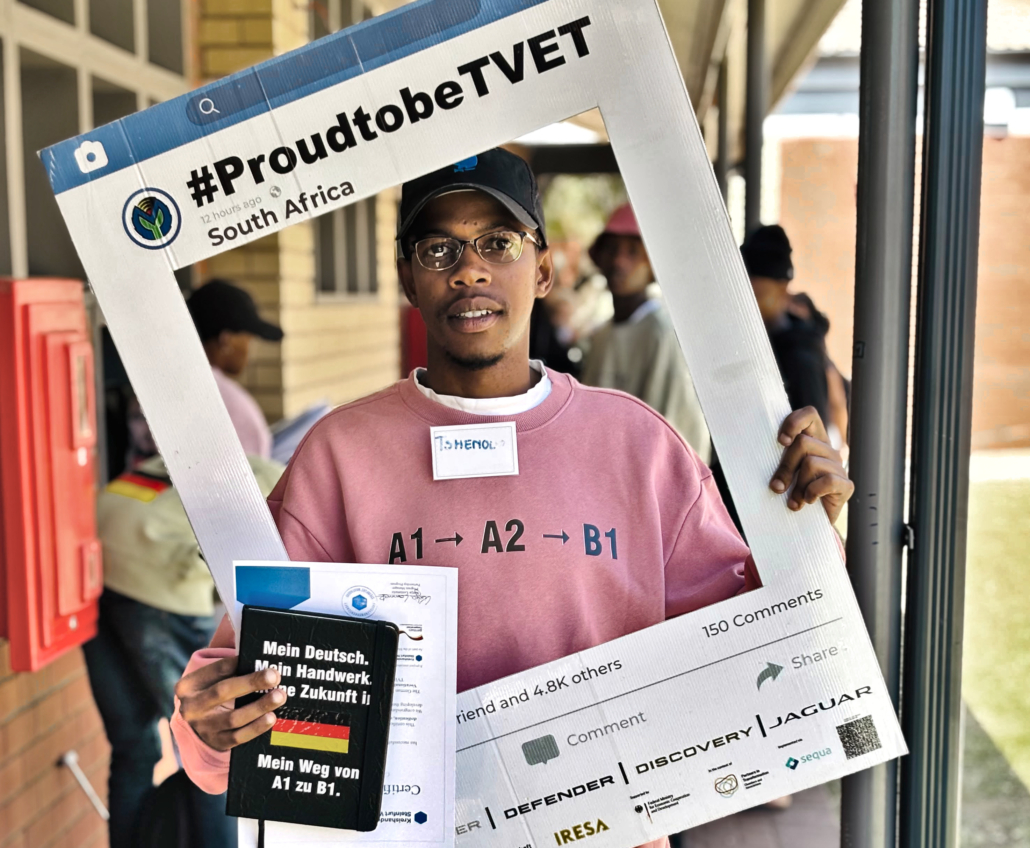
Since halfway through this year, Kreishandwerkerschaft Steinfurt Warendorf has been carrying out a new project aiming to connect potential apprentices from South Africa with German businesses in opur districts. In collaboration with our long-standing project partner, Motheo TVET College in Bloemfontein, the initiative aims to prepare young people for apprenticeships in the skilled trades in Germany and place them with member companies. The initiative is supported by the global project “Partnerships for Development-Oriented Training and Labor Migration” (PAM), as well as the GIZ Skilled Workers Fund and sequa gGmbH. The goal is to address the demand for skilled workers in the German trades sector while improving employment prospects for young people in South Africa.
Participants receive an intensive German language course up to Level B1—which has already begun—and take an accredited language exam. In addition, intensive cross-disciplinary training, intercultural preparation courses, and career orientation activities are planned. The selection of apprenticeship trades is based on the applicants’ personal and professional profiles as well as the needs of the companies.
Kreishandwerkerschaft Steinfurt Warendorf accompanies and supports its member companies throughout the process—from selecting suitable applicants, through matching and visa applications, to their arrival in Germany and the start of their apprenticeship. Mentoring, coaching, and, if necessary, additional language support are also provided.
In addition, the occupational training programs at Motheo TVET College are to be expanded on a permanent basis. A modular, interactive, and intensive training program is designed to specifically prepare young people for the demands of a career in the skilled trades. Through capacity-building measures, the college will be empowered to independently implement this program in the long term. The project also aims to develop recommendations for a sustainable model for the migration of trainees from South Africa. The experience gained through this initiative could be applied to other regions and partnerships in the future.
This post is also available in:


